The History of Copywriting: How Did the Profession Develop?


Copywriting is a field that has gained considerable popularity in recent decades, a natural consequence of the development of digital marketing and new technologies. Although its greatest boom came only recently, its potential was already growing many years ago. In this article, we will trace the history of copywriting – from the ancient clay tablets of the Sumerians to the age of artificial intelligence.
The history of copywriting – the beginnings
To discuss such a significant subject as history, we first need to define the concept of copywriting precisely.
Copywriting is the process of creating professional content that fulfils the client’s specific marketing and sales objectives.
In other words, it is an investment that generates returns over a given period. Seen in this light, we have to admit that its history is not particularly distant, especially when it comes to internet copywriting.
Nevertheless, we will try to present a broad historical outline that led to the emergence of this profession.
The development of writing – 5,000 years ago
For copywriting to emerge, the resources needed to carry out such work had to exist first. Naturally, the fundamental tool is writing, which probably developed earliest among the Sumerians, around 3500–3000 BC.
They were the first advanced civilisation to use specific symbols to record inventory levels and establish property rights. This people inhabited southern Mesopotamia, where the first systems for recording resources were created – an early form of commercial information exchange.

The oldest clay tablet in the world containing cuneiform writing. The information has been partially recovered, and its interpretation is fairly precise. It reads: 29,086 measures of barley delivered over a period of 37 months to the state official Kushim, responsible for beer production at the Temple of Ishtar in Uruk.
Expansion in India – 3,800 years ago
Although the spread of writing in Europe was the next key step, it is worth mentioning India, where extensive religious and philosophical texts were created.
The ideal example is the Vedas, which formed the basis of Vedic religion at the time. Although today a substantial book is most commonly associated with the Bible, the Vedas are six times longer.
South and Central Asia set the pace in many other religious texts, particularly during the period of Brahmanism. These included the canonical Upanishads, used as supporting texts for meditation techniques, and the Panchatantra, a large collection of fables.
The history of copywriting – its proper development
The true development of copywriting began with the technological revolution, which dramatically increased access to writing for a wider audience.
The invention of paper – nearly 2,000 years ago
Before the age of printing could begin, a medium cheaper and easier to produce on a large scale than parchment or papyrus had to appear. The breakthrough was the invention of paper, attributed to the Chinese official Cai Lun in 105 AD. Paper dramatically reduced the cost of preserving information and, over the following centuries, spread to the Middle East and eventually Europe, preparing the ground for the publishing revolution.
The beginnings of printing – more than 570 years ago
Although monumental literary works were already being created in medieval Europe, such as the anonymous Song of Roland from the turn of the 11th and 12th centuries and Dante’s Divine Comedy, written at the beginning of the 14th century, reproducing them by hand severely limited their reach. A genuine breakthrough came in the 15th century, when printed copies of major texts began to appear.
The first book printed in Europe using movable type was Gutenberg’s Bible, which appeared in 1455. It is important to remember, however, that printing spread slowly. For the next half-century, incunabula were produced only sporadically; today, they are documents of immense historical value.
Even so, the most difficult stages were behind us – from that point onwards, almost all works were presented to the world in printed form. It was only a matter of time before commercial content reached a wider audience.
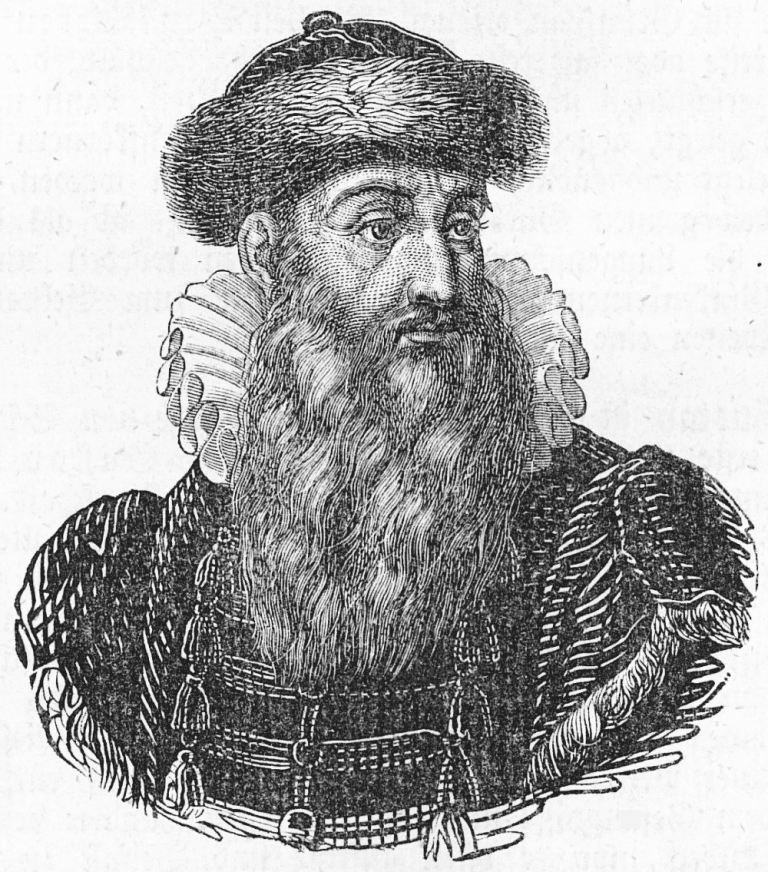
Johannes Gutenberg, creator of the first method of printing with movable type in Europe.
The development of the press – 1609
The invention of printing presses made the development of the mass press possible.
The first printed newspapers were published in 1609, including Relation from Strasbourg. Several decades later, in 1661, the first regular Polish newspaper appeared – Merkuriusz Polski Ordynaryjny. The development of the press made it possible to distribute information on a mass scale. Entrepreneurs therefore realised that it was worthwhile placing advertisements for their products in newspapers.
The first advertising agency – 1841
As the press developed, the classified advertising market became commercialised. In 1841, Volney B. Palmer opened the world’s first advertising agency in Philadelphia. Initially, he operated as a broker for advertising space in local newspapers. This was a crucial moment because it established advertising as a separate industry, creating a demand in the following decades for professional writers of slogans and promotional copy.
The invention of the typewriter – 1867
An undeniable milestone in the development of copywriting was the invention of the typewriter, which made writing and the mechanisation of work considerably easier. It was created by the American journalist Christopher Latham Sholes in 1867.
The fathers of copywriting
Among the many inventions and events that enabled the development of written communication, we should also recognise the figures regarded as the founding fathers of copywriting. The most important include:
- John Emory Powers – considered the first professional copywriter, he worked for companies as a kind of freelancer; he believed that advertising copy should be simple, objective and based on facts;
- Bruce Fairchild Barton – an American writer and politician who owned an advertising agency; during a campaign for the Alexander Hamilton Institute, he developed the idea of storytelling;
- Claude C. Hopkins – in his work, he focused on achieving the greatest possible sales results through advertising; he wrote the well-known book Scientific Advertising;
- David Ogilvy – known as the “father of modern advertising”; in the 1950s and 1960s, he revolutionised the industry during its so-called Golden Age of Advertising, placing great emphasis on in-depth research, testing headline effectiveness and respecting consumers’ intelligence; he wrote the celebrated book Ogilvy on Advertising;
- Eugene Schwartz – an outstanding practitioner of direct-response copywriting; he formulated the key concept of “customer awareness levels”, which remains a foundation of sales strategies to this day.
The development of the internet and the spread of content – from 1990
Although we have covered 5,000 years of writing in brief, the true history of copywriting is unfolding before our eyes as an inseparable part of human development.
For thousands of years, people struggled with a shortage of information. Since the 1990s, however, the dramatic expansion of online content has meant that information overload and the sheer volume of data have become the main problems.
The early 2000s were marked by so-called SEO copywriting, which initially relied on the artificial and mass insertion of keywords, known as keyword stuffing, along with bold formatting of key phrases to manipulate algorithms. After 2010, the development of social media led to the emergence of microcontent (short-form copy), promoting maximum concision.
Today’s search engine algorithms are constantly dealing with a growing wave of low-quality material and content farms. Although the market standard aimed at achieving the highest quality is represented by the E-E-A-T guidelines (Experience, Expertise, Authoritativeness and Trustworthiness), modern copywriting covers a broad spectrum – from in-depth, professional expert articles to mass-produced content.
Instead of simply filling pages with keywords, the focus has shifted to analysing algorithms and user intent. This digital evolution laid the groundwork for the enormous shift brought about by the arrival of artificial intelligence.
The AI revolution and modern copywriting – from 2023
Since 2023, the copywriting market has undergone another major transformation due to the popularisation of generative artificial intelligence, including advanced large language models (LLMs). AI has become a common assistant in creative work, automating the creation of text drafts, data structuring and preliminary SEO optimisation.
Today, the copywriter’s profession has clearly evolved. Writers now largely act as content strategists, editors and prompt engineers who direct the work of artificial intelligence. The greatest market value lies with specialists who can combine human experience with the skilful use of AI tools.
The market is still changing rapidly, so we can only observe the next trends and see what the future will bring.
Summary
- The history of copywriting stretches back thousands of years, although its sudden boom came only recently, creating the modern profession we know today.
- Events important to the development of copywriting included the invention of writing, paper, printing and the typewriter, the development of the press and the establishment of the first advertising agency in the 19th century.
- In the 20th century, pioneers such as David Ogilvy shaped the industry by introducing psychology, research and effectiveness testing into copywriting.
- In the past, owning a book was a sign of wealth. Today, however, we carry out strategic and demanding work to present content to as many users as possible.
- Recent years have shown that copywriting is highly susceptible to change, making the future impossible to predict.
Leave a Reply